
As AI and high-density computing increase mission-critical data center cooling loads, liquid cooling systems are becoming more important to mission-critical infrastructure.
But moving heat efficiently with water requires more than properly sized pumps, piping and heat exchangers.
Water quality matters.
Poor water chemistry can contribute to corrosion, scale, biological growth, fouling and reduced heat-transfer efficiency. Over time, those problems can affect pumps, valves, heat exchangers and other critical components—and potentially increase both energy consumption and maintenance requirements.
For engineers designing liquid-cooled data centers, water treatment should therefore be considered part of the cooling-system design from the beginning.
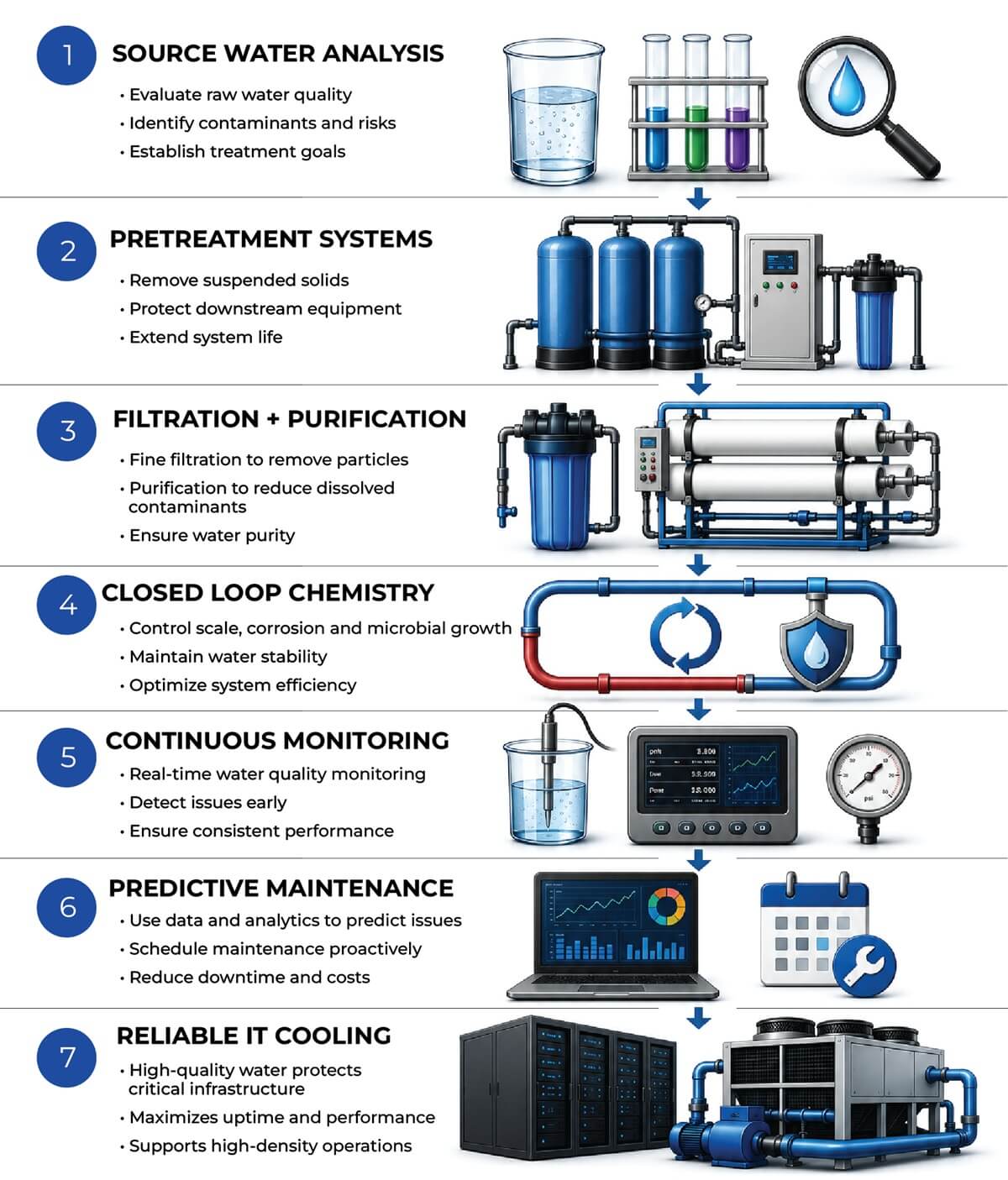
At GA Fleet, we believe the best approach is to look at the complete hydronic system: water chemistry, pumps, piping, filtration, controls and ongoing maintenance all have to work together.
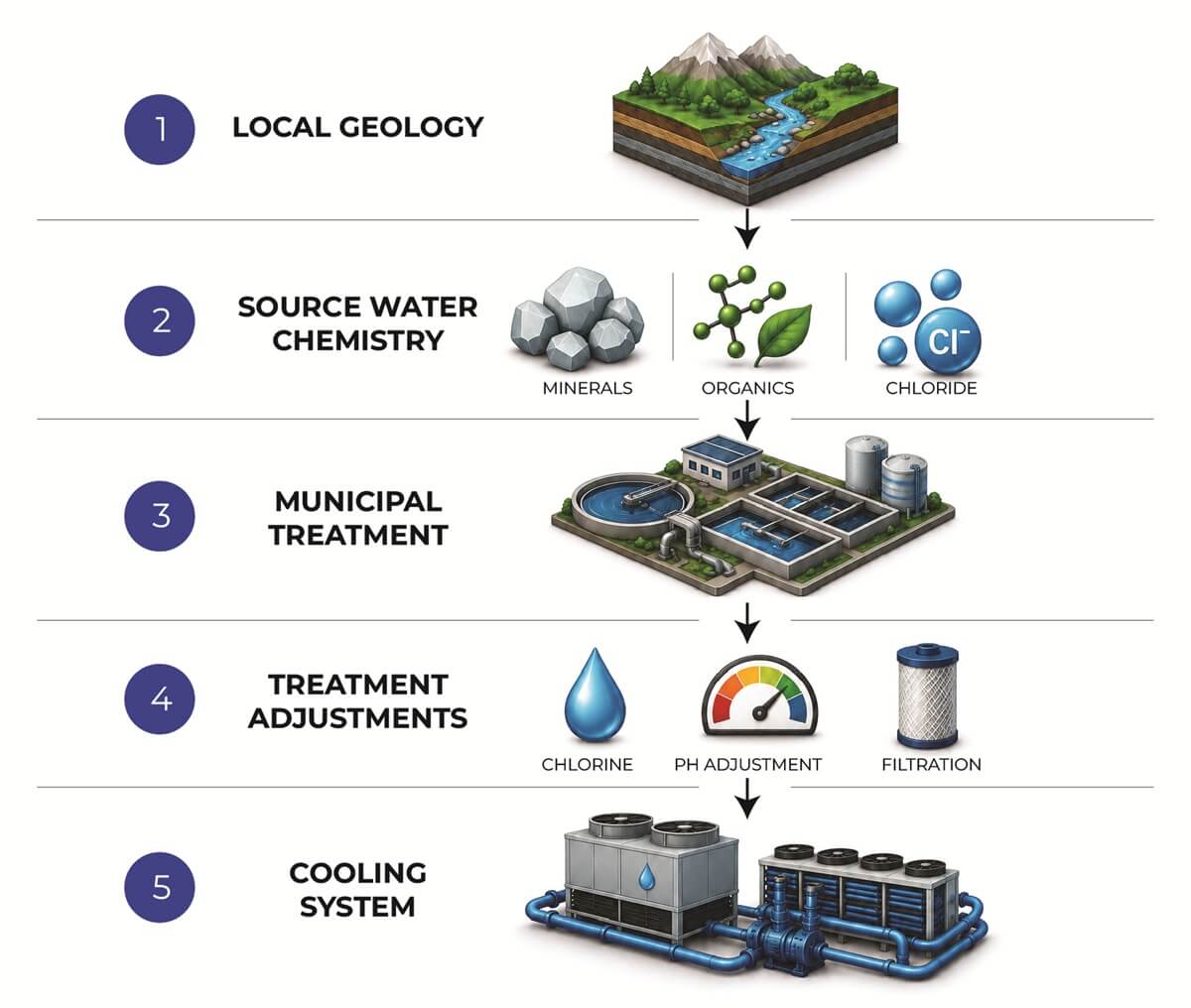
Factors Influencing Source Water Quality
Why Water Quality Is Critical to Liquid Cooling
A liquid cooling system depends on predictable heat transfer and flow.
When water quality deteriorates, system performance can deteriorate with it.
Common water-related problems include:
- Corrosion
- Scale
- Biological growth
- Suspended solids
- Fouling
- Clogged strainers and filters
- Reduced heat-transfer efficiency
- Increased pumping requirements
- Premature equipment wear
The specific risks depend on the type of cooling loop, source water, operating temperatures, materials of construction and equipment requirements.
That's why there isn't one universal water-treatment program data centers.
The treatment strategy needs to be engineered around the actual system.
1. Start With the Water
One of the first steps in developing a treatment strategy is understanding the water that will be used in the system.
Engineers should evaluate relevant water-quality parameters such as:
- pH
- Hardness
- Alkalinity
- Conductivity
- Total dissolved solids
- Chlorides
- Silica
- Suspended solids
- Metals
- Microbiological activity
Source water can vary significantly from one location to another.
Municipal water in one market may behave very differently from groundwater or another supply somewhere else.
Understanding the incoming water gives engineers a better foundation for determining what pretreatment, filtration, chemical treatment and monitoring may be required.
2. Consider Every Material in the Cooling Loop
Water chemistry and materials of construction have to be evaluated together.
A data center cooling system may contain several materials, including:
- Carbon steel
- Stainless steel
- Copper
- Brass
- Aluminum
- Elastomers
- Thermoplastic piping
- Heat exchanger materials
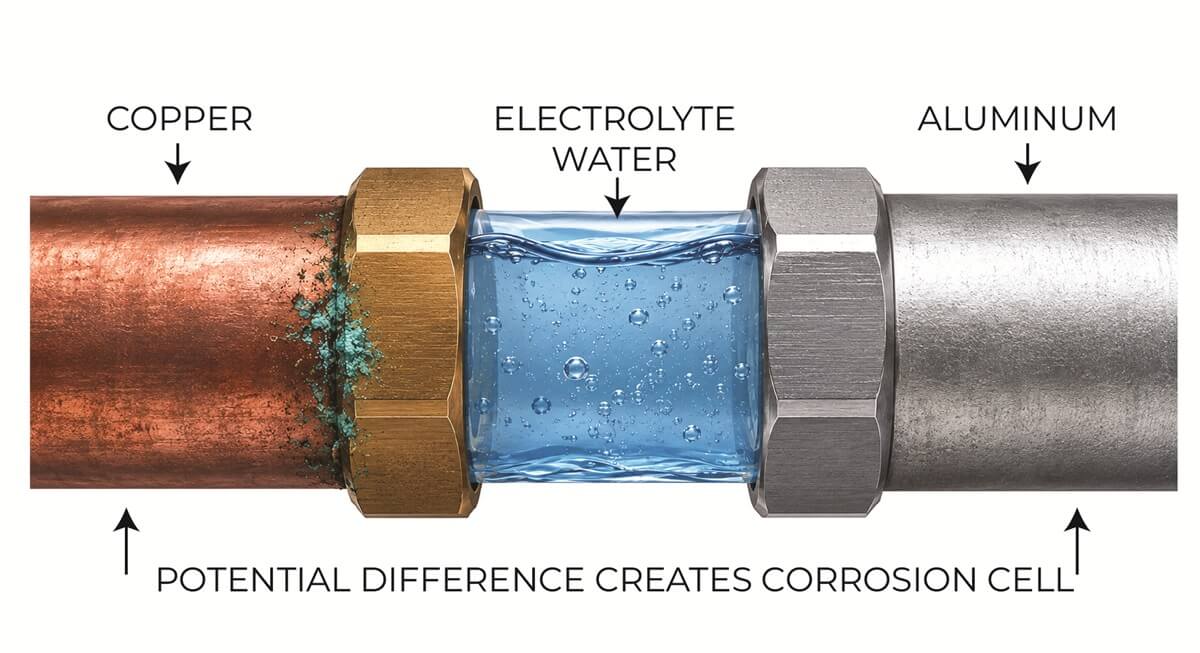
Different materials can have different water-quality requirements and corrosion sensitivities.
Mixed-metal systems deserve particular attention.
Engineers should evaluate the entire wetted system rather than determining water chemistry based on one component.
That includes pumps, heat exchangers, valves, piping, seals and instrumentation.
3. Control Corrosion
Corrosion can shorten equipment life and introduce contaminants into the cooling loop.
Corrosion products can circulate through the system and contribute to fouling in:
- Heat exchangers
- Cold plates
- Filters
- Strainers
- Pumps
- Control valves
- Instrumentation
An effective corrosion-control strategy begins with proper system design and compatible materials.
Depending on the application, treatment may also involve maintaining appropriate pH, controlling dissolved oxygen and using corrosion inhibitors.
The objective is not simply to protect the pipe.
It is to protect the entire cooling system.
4. Prevent Scale Before It Affects Heat Transfer
Scale acts as an insulating layer.
When mineral deposits accumulate on heat-transfer surfaces, the system may need more energy to achieve the same cooling performance.
Scale can also reduce flow through small passages and affect valves, piping and heat exchangers.
Engineers should evaluate scale-forming potential based on source-water chemistry, concentration, operating temperature and system design.
Treatment strategies may include:
- Water softening
- Reverse osmosis
- Demineralization
- Chemical scale control
- Filtration
- Other pretreatment technologies
The appropriate solution depends on the water and the application.
5. Control Biological Growth
Where conditions support biological activity, bacteria and other microorganisms can create additional problems.
Biofilms can develop on system surfaces, reducing heat-transfer efficiency and potentially contributing to microbiologically influenced corrosion.
Biological growth can also foul filters and restrict smaller flow passages.
Depending on the cooling system, engineers may need to evaluate microbiological monitoring and treatment as part of the overall water-management program.
This is another reason water treatment should be considered a system requirement rather than an afterthought.
6. Use Filtration to Protect Critical Components
Even when water chemistry is properly controlled, suspended solids can create problems.
Particulates can come from:
- Incoming water
- Construction debris
- Corrosion products
- Pipe scale
- Maintenance activities
- Existing system contamination
Filtration helps keep those materials from circulating through sensitive equipment.
The appropriate filtration strategy depends on particle size, system flow and equipment requirements.
Engineers may consider technologies such as:
- Strainers
- Cartridge filtration
- Bag filtration
- Side-stream filtration
- Automatic filtration
- Other application-specific systems
Filtration should be selected based on what the downstream equipment actually needs—not simply what has traditionally been used on HVAC systems.
7. Pay Attention to Water Quality During Construction
Some cooling-system problems begin before the data center ever opens.
Construction debris, dirt, oils and other contaminants can enter piping during fabrication and installation.
If they aren't properly removed, those materials can remain in the system through startup.
A strong commissioning plan should address:
- Piping cleanliness
- Flushing
- Initial filtration
- Water-quality testing
- Chemical treatment
- System passivation where required
- Documentation of baseline conditions
Starting with a clean system is much easier than trying to correct contamination after the facility is operating.
GA Fleet's startup and aftermarket experience makes this an especially important point for us.
The transition from construction to operation should be planned—not improvised.
8. Monitor Water Quality Continuously
Water treatment isn't a one-time event.
System conditions change.
Makeup water enters the system. Chemicals are consumed. Equipment operates at different loads. Maintenance introduces new variables.
Monitoring can help operators identify changes before they become larger problems.
Depending on the application, monitoring may include:
- Conductivity
- pH
- Temperature
- Flow
- Pressure
- Corrosion indicators
- Chemical concentration
- Filter differential pressure
- Water consumption
- Alarm conditions
Automation and controls can provide greater visibility into these conditions and help operators respond when performance moves outside established parameters.
For a mission-critical facility, early warning is valuable.
9. Don't Overlook Pump Performance
Water treatment and pump performance are closely connected.
Scale, fouling and suspended solids can change system resistance and affect the conditions under which pumps operate.
Poor water quality may also affect pump components, seals and other wetted surfaces.
Engineers should therefore think about water chemistry when evaluating:
- Pump materials
- Mechanical seals
- Design flow
- Total dynamic head
- Variable-speed operation
- Redundancy
- Filtration
- Maintenance requirements
Likewise, treatment systems have hydraulic requirements of their own.
Filters, treatment equipment and other components add pressure loss that needs to be considered when pumps are selected.
Water treatment and pumping should be engineered as parts of the same system.
10. Consider Leak Detection Part of the Water Strategy
In a data center, water needs to stay where it belongs.
That makes leak detection another important part of liquid-cooling infrastructure.
Early detection can help operators respond to leaks before they cause more significant damage or water loss.
Depending on the facility, leak-detection systems can be installed around:
- Mechanical rooms
- Pumps
- Cooling distribution equipment
- Piping
- Valves
- Heat exchangers
- Other critical water infrastructure
GA Fleet has specialized experience with liquid leak-detection systems used to protect critical mechanical systems and facilities.
For data centers, combining water-quality monitoring with leak detection creates another layer of visibility and protection.
11. Design for Maintenance
Even the best water-treatment program needs ongoing attention.
Filters need to be inspected. Pumps require service. Instrumentation needs calibration. Water chemistry needs to be monitored.
That means maintainability should be considered during design.
Engineers should ask:
Can operators easily access filters and strainers?
Are sample points located where technicians can use them?
Can pumps and treatment equipment be isolated for service?
Can critical components be replaced without unnecessarily disrupting cooling?
Is there enough space to maintain the equipment safely?
These details can have a major impact on how successfully the water-treatment program performs over the life of the facility.
12. Establish a Water Management Plan
A reliable liquid-cooling system needs more than equipment.
It needs a plan.
A water-management program should clearly establish:
- Target water-quality parameters
- Testing frequency
- Treatment requirements
- Monitoring procedures
- Alarm limits
- Filter maintenance
- Corrective actions
- Documentation
- Responsibilities
That information provides operators with a consistent framework for maintaining system performance.
It also creates a baseline that can help identify changes over time.
Water Treatment Is Also an Energy-Efficiency Strategy
Water treatment is usually discussed in terms of protecting equipment.
But it can also affect energy performance.
Scale and fouling reduce heat-transfer efficiency. Restrictions increase pressure loss. Poor system conditions can cause pumps and cooling equipment to work harder.
Keeping the cooling loop clean can help the system operate closer to its intended design conditions.
For a data center operating continuously, even relatively small efficiency improvements can become meaningful over the life of the facility.
That's why we see good water management as both a reliability strategy and an efficiency strategy.
Local Expertise Backed by Expanded Data Center Capabilities
GA Fleet has more than 60 years of experience supporting pumping, HVAC, plumbing and water-management systems.
Our capabilities include:
- Pumps and pumping systems
- Hydronic systems
- Water treatment and filtration
- HVAC equipment
- Packaged mechanical systems
- Controls
- Leak detection
- Startup support
- Preventative maintenance
- Aftermarket service
Through the Vessco Water network, GA Fleet customers can also access expanded data center capabilities including packaged water-treatment systems, chemical feed systems, pumping and flow control, automation and instrumentation, cooling-water systems, prefabricated piping, monitoring and controls, and startup and commissioning support.
This allows us to approach data center water treatment as part of the complete mechanical system—not as a standalone piece of equipment.
Better Water Quality Supports Better Cooling
Liquid cooling puts water closer to some of the most valuable and mission-critical equipment in the facility.
That makes water quality too important to address after startup.
The best approach begins during design by considering source water, materials, treatment, filtration, pumps, controls and monitoring together.
Then it continues through proper flushing, startup, commissioning and ongoing maintenance.
Good water treatment protects more than the water. It helps protect heat-transfer performance, pumps, piping, equipment life, energy efficiency and ultimately the reliability of the data center itself.
Planning a liquid-cooled data center project in the Northeast? Contact GA Fleet to discuss pumps, hydronics, water treatment, filtration, controls and leak-detection solutions for your cooling infrastructure. Call 914-835-4000.
Frequently Asked Questions About Data Center Liquid Cooling Water Treatment
Why is water treatment important in liquid-cooled data centers?
Water chemistry can affect corrosion, scale, biological growth, fouling and heat-transfer efficiency. A properly designed water-treatment program helps protect pumps, piping, heat exchangers, valves and other cooling-system components while supporting reliable long-term performance.
What water quality should a data center liquid cooling system maintain?
There is no single water-quality specification appropriate for every system. Requirements depend on equipment, materials of construction, operating temperature, system configuration and manufacturer recommendations. Engineers should establish project-specific water-quality parameters during design.
What causes corrosion in data center cooling systems?
Corrosion can be influenced by factors including pH, dissolved oxygen, conductivity, chlorides, temperature, water chemistry and materials of construction. Mixed-metal systems may require additional consideration.
Why is scale a problem in liquid cooling systems?
Scale can accumulate on heat-transfer surfaces and restrict smaller passages. This can reduce heat-transfer efficiency, increase system resistance and potentially cause cooling equipment to consume more energy.
What type of filtration should a data center cooling system use?
The appropriate filtration depends on system cleanliness requirements, particle size, flow and equipment sensitivity. Options can include strainers, cartridge filters, bag filters, side-stream filtration and automatic filtration systems.
Should water treatment be designed before the cooling equipment is selected?
Water treatment should be coordinated with the overall mechanical design. Engineers need to consider source water, piping materials, pumps, heat exchangers, operating temperatures, filtration and equipment-manufacturer water-quality requirements together.
How does water treatment affect pump performance?
Fouling, scale and solids can increase system resistance or affect pump components. Treatment and filtration equipment also create pressure losses that should be included when calculating total dynamic head and selecting pumps.
Why is flushing important before commissioning a liquid cooling system?
Construction can introduce dirt, oils, pipe debris and other contaminants into the cooling loop. Proper cleaning and flushing help remove those materials before the system enters normal operation and establish a cleaner baseline for ongoing water treatment.
Should water quality be continuously monitored?
Critical parameters should be monitored at a frequency appropriate for the system. Depending on the application, automated monitoring may provide continuous information about conductivity, pH, temperature, flow, pressure or other operating conditions.
Why is leak detection important for liquid-cooled data centers?
Liquid cooling places water infrastructure near mission-critical electronic and electrical equipment. Leak-detection systems can provide early warning, helping operators respond quickly and limit water loss, equipment damage and operational risk.
Can proper water treatment improve data center energy efficiency?
Yes. Scale, fouling and restrictions can reduce heat-transfer efficiency and increase hydraulic resistance. Maintaining clean heat-transfer surfaces and predictable flow conditions can help pumps and cooling equipment operate closer to their intended design conditions.
How does GA Fleet support data center water treatment?
GA Fleet provides expertise in pumping, hydronics, water treatment and filtration, controls, packaged mechanical systems and leak detection. GA Fleet also supports systems through startup and aftermarket service. Through the Vessco Water network, customers can access additional packaged water treatment, chemical feed, automation, prefabrication and data center cooling capabilities.