
On a fast-moving mission-critical data center project, one of the most expensive places to discover a design conflict is in the field.
A pump doesn't have enough clearance for maintenance. A pipe conflicts with electrical infrastructure. A valve can't be accessed. Equipment connections don't line up. Or a mechanical system has to be relocated after other trades have already completed their work.
Every one of these problems can add labor, material costs and time to an already demanding construction schedule.
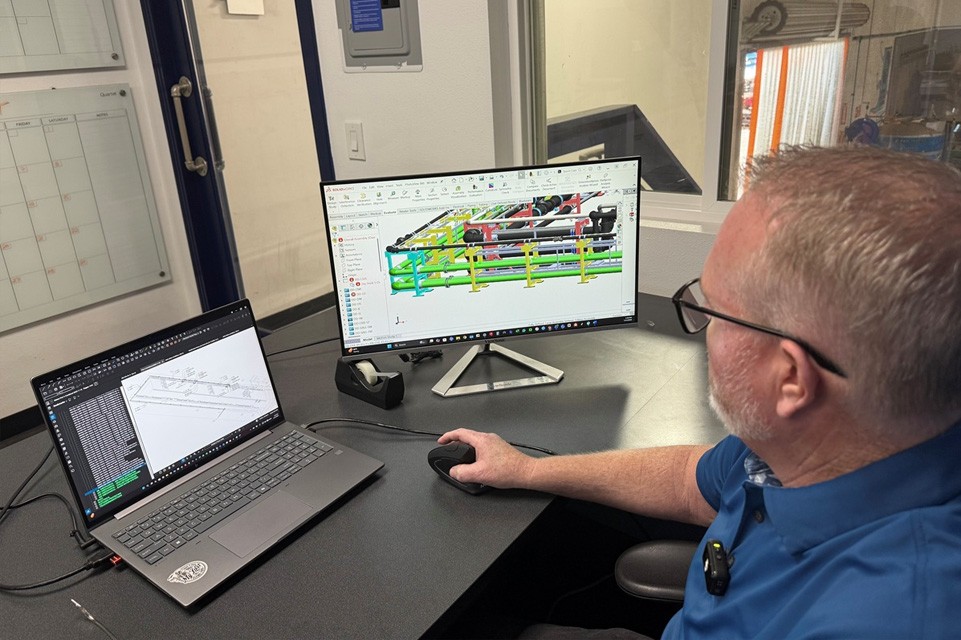
Building Information Modeling (BIM) helps project teams find and resolve these issues before construction begins.
For data center owners, engineers and contractors, BIM can improve mechanical coordination, reduce change orders, support prefabrication and help projects move from design through construction and startup faster.
BIM Is More Than a 3D Drawing
BIM is sometimes thought of simply as a 3D model of a building.
For engineers and contractors, its real value is coordination.
BIM brings information from multiple building systems into a shared digital environment so teams can understand how those systems will fit together before crews begin installation.
On a data center cooling project, that can include:
- Cooling water piping
- Pumps and pumping systems
- HVAC equipment
- Prefabricated mechanical systems
- Valves and controls
- Electrical conduit
- Cable trays
- Structural steel
- Fire protection
- Plumbing systems
- Equipment supports
- Building architecture
- Access and maintenance clearances
The more complex the mechanical infrastructure becomes, the more valuable that coordination can be.
Six Ways BIM Can Reduce Data Center Construction Costs
1. Find Conflicts Before Construction
Clash detection is one of the most obvious benefits of BIM.
A coordinated model can identify situations such as:
- Piping interfering with structural steel
- Electrical infrastructure conflicting with mechanical systems
- Pumps without adequate removal clearance
- Valves located where technicians cannot easily reach them
- Equipment that cannot be properly accessed for maintenance
- Mechanical components competing for the same space
These problems are much easier to address on a computer screen than in an active mechanical room.
Resolving them during design can reduce field modifications, material waste and schedule disruptions.
2. Reduce Rework and Change Orders
Changes become more expensive as a project progresses.
Moving a pipe in a BIM model is relatively simple. Moving that same pipe after it has been fabricated and installed is not.
Better coordination before construction can help reduce:
- Field rework
- Material waste
- Installation changes
- Revised drawings
- Contractor delays
- Change orders
- Schedule risk
For large data center projects with multiple trades working simultaneously, even small improvements in coordination can make a meaningful difference.
3. Make Prefabrication More Practical
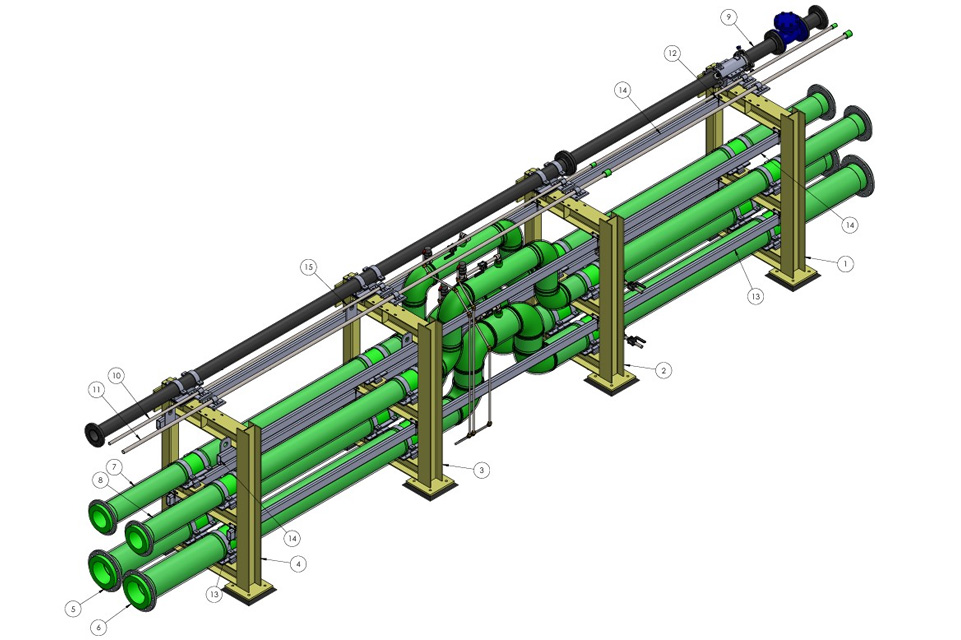
BIM becomes especially valuable when a project incorporates prefabricated mechanical systems.
Detailed models provide the dimensions and coordination information needed to engineer and fabricate assemblies before they reach the jobsite.
Depending on the application, prefabricated systems may include:
- Pump skids
- Cooling water skids
- Valve assemblies
- Piping assemblies
- Packaged HVAC systems
- Controls and instrumentation
- Mechanical room assemblies
Instead of sending individual components to the jobsite and assembling everything in the field, contractors can receive coordinated systems designed around the project's actual conditions.
That can reduce onsite labor and help accelerate installation.
4. Improve Coordination Between Trades
Modern data centers bring together a large number of highly technical systems within a limited amount of space.
Mechanical contractors aren't working independently. Their systems must coordinate with electrical, structural, plumbing, fire protection, controls and other infrastructure.
BIM gives these teams a common reference point.
That can improve coordination among:
- Owners
- Consulting engineers
- Mechanical engineers
- Electrical engineers
- Structural engineers
- General contractors
- Mechanical contractors
- Equipment suppliers
- Fabricators
- Commissioning teams
When everyone is working from a coordinated model, fewer questions have to be answered in the field.
5. Protect the Construction Schedule
For data centers, schedule certainty matters.
When crews discover conflicts during construction, work may stop while teams wait for revised drawings, new materials or decisions from engineers.
Those delays can affect more than one trade and quickly work their way through the construction schedule.
BIM helps shift more of that problem-solving into the design and coordination phase.
With major conflicts resolved before installation, contractors can spend less time:
- Waiting for RFIs
- Relocating equipment
- Reworking piping
- Modifying supports
- Fabricating unexpected connections
- Coordinating last-minute changes
The result can be a more predictable path from design to installation and commissioning.
6. Plan for Maintenance Before the Equipment Is Installed
This is an area we think deserves more attention.
A mechanical system shouldn't only fit on the day it is installed. It needs to be serviceable for years afterward.
GA Fleet and Fleet Pump & Service Group work with pumping, HVAC and other mechanical systems throughout their lifecycle. That means we see what happens after the construction team leaves.
BIM gives engineers and owners an opportunity to evaluate serviceability before equipment is installed.
For example:
Can a pump be removed without dismantling surrounding piping?
Can technicians safely reach valves, controls and instrumentation?
Is there adequate clearance to service the equipment?
Can major components be replaced in the future?
Can the system be isolated for maintenance without affecting critical operations?
These details can have a significant impact on the long-term reliability and maintainability of a mission-critical facility.
BIM and Pumping System Design
Pumps are at the center of many data center mechanical and cooling systems.
Selecting the correct pump based on flow, head, efficiency and redundancy is critical—but engineers also need to consider how that pump physically integrates into the mechanical system.
BIM can help teams evaluate:
- Pump placement
- Suction and discharge piping
- Valve locations
- Equipment supports
- Electrical and controls connections
- Service clearances
- Removal paths
- Redundancy configurations
- Future expansion
This creates an important connection between hydraulic design and physical constructability.
A pump can be perfectly selected hydraulically and still create operational problems if it cannot be properly installed or serviced.
BIM Can Help Prepare for Future Data Center Expansion
Many data centers are designed to grow.
AI, cloud computing and higher rack densities can increase cooling requirements and create the need for additional pumps, piping and mechanical infrastructure.
A coordinated BIM model can provide a useful digital record for future expansion.
Project teams can use the existing model to evaluate where additional equipment might be located, how new piping could be routed and how expansion might affect existing mechanical systems.
Engineers can also plan ahead by considering:
- Future pump capacity
- Additional piping connections
- Expansion space
- Equipment access
- Isolation points
- Additional valves and controls
Planning for tomorrow's expansion during today's design can make future projects easier to execute.
BIM Supports the Entire Mechanical System Lifecycle
The benefits of BIM shouldn't end when construction is complete.
Accurate information about equipment locations, piping arrangements and system configuration can also support startup, commissioning, maintenance and future modifications.
GA Fleet supports customers from initial system design and equipment selection through startup and long-term aftermarket service.
Fleet Pump & Service Group provides ongoing support for installed pumping, HVAC and mechanical equipment, including preventative maintenance, repairs, replacement equipment, parts and rental systems.
That lifecycle perspective is important for mission-critical data centers where cooling and mechanical systems have to perform reliably long after commissioning.
Local Expertise With Expanded Data Center Capabilities
GA Fleet brings decades of experience supporting complex pumping, HVAC, plumbing and mechanical systems throughout New York and the Northeast.
Through the Vessco Water network, our customers can also access specialized data center engineering and prefabrication capabilities from sister company Santa Fe Water Systems.
These capabilities include:
- 3D BIM modeling and coordination
- Mechanical and civil engineering
- Hydraulic calculations
- Integration drawings
- Clash detection
- Equipment engineering
- Shop drawings and detailing
- Prefabricated liquid cooling pipe skids
- Pump skids
- Valve stations
- PP-RCT and metallic piping systems
- Factory fabrication and testing
- Startup and commissioning support
This allows GA Fleet to combine local equipment and application expertise with specialized engineering, BIM and fabrication resources for demanding data center projects.
The Best Field Problem Is the One You Solve Before Construction
BIM isn't valuable simply because it creates a sophisticated 3D model.
Its value comes from what the project team can do with that information.
Finding conflicts earlier can reduce rework. Better coordination can reduce change orders. Detailed models can support prefabrication. Planning equipment access can simplify future maintenance.
And all of those improvements can help a data center project move from design to operation more efficiently.
For owners, engineers and contractors working under increasingly aggressive construction schedules, that's the real benefit of BIM.
Planning a data center project in the Northeast? Contact GA Fleet to discuss your pumping, HVAC and mechanical system requirements and learn how our expanded Vessco Water capabilities can support BIM coordination, prefabrication, startup and long-term service. Call 914-835-4000.
Frequently Asked Questions About BIM for Data Centers
What is BIM?
Building Information Modeling (BIM) is a collaborative digital design and coordination process that creates a detailed model of a building and its systems. For data center projects, BIM can help mechanical, electrical, structural and other disciplines coordinate infrastructure before construction begins.
How does BIM reduce data center construction costs?
BIM can identify clashes and constructability issues before installation, helping reduce field rework, material waste, change orders and construction delays. Resolving problems digitally is generally more efficient than modifying installed equipment and piping in the field.
How can BIM speed data center construction?
BIM allows project teams to coordinate systems earlier so contractors spend less time resolving conflicts during installation. Detailed models can also support prefabrication, allowing mechanical assemblies to be manufactured while other construction activities are underway.
Why is BIM important for data center pumping systems?
BIM helps engineers coordinate pumps with piping, valves, electrical systems, structural components and surrounding equipment. It can also help verify maintenance clearances and equipment removal paths before installation.
How does BIM support prefabricated mechanical systems?
Accurate 3D models provide dimensions and coordination information that can be used to fabricate pump skids, piping assemblies, valve stations and other mechanical systems offsite. This can reduce field fabrication and simplify installation.
Can BIM help reduce data center change orders?
Yes. Identifying conflicts before construction can reduce the need for field modifications and design changes. While BIM cannot eliminate every change order, early coordination can significantly reduce avoidable conflicts and rework.
Can BIM improve data center maintenance?
Yes. BIM allows engineers to evaluate equipment access and maintenance clearances during design. This can help ensure pumps, valves and other critical equipment can be inspected, repaired and replaced throughout the life of the facility.
Can BIM help with future data center expansion?
Yes. A coordinated BIM model provides a digital record of existing infrastructure that can help engineers evaluate future pumps, piping, cooling equipment and mechanical systems without starting the design process from scratch.
Does GA Fleet provide BIM modeling?
GA Fleet works with owners, engineers and contractors on pumping, HVAC and mechanical systems throughout the project lifecycle. Through sister company Santa Fe Water Systems and the Vessco Water network, GA Fleet customers can also access specialized 3D BIM modeling, mechanical coordination, engineering and prefabrication capabilities for data center cooling infrastructure.