
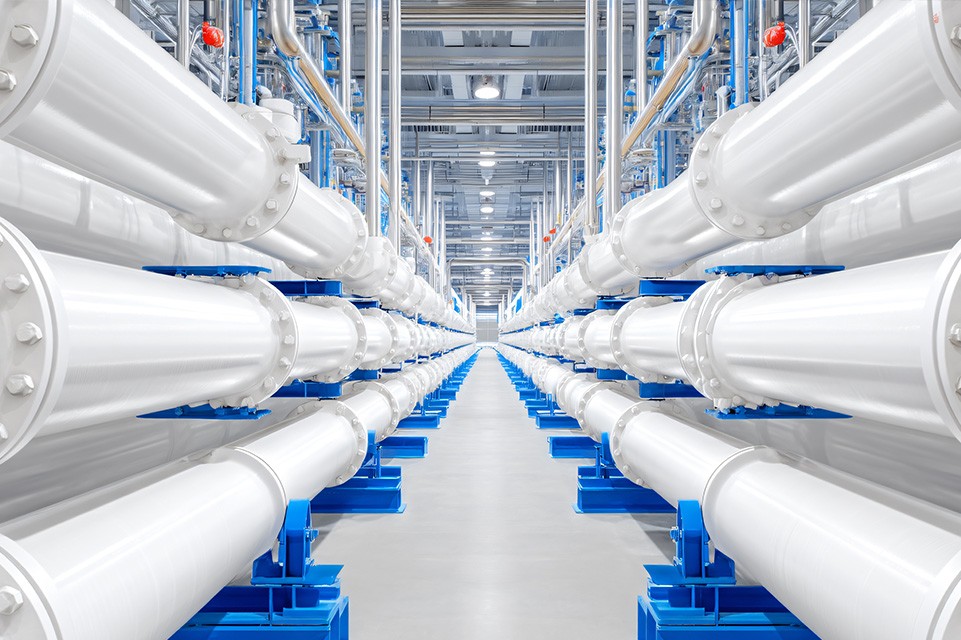
For data center owners, engineers and contractors, time has become one of the most important factors in cooling system design and construction.
AI and high-density computing are increasing cooling requirements at the same time project teams are being asked to bring new capacity online faster. Labor availability, field coordination and commissioning can all become critical schedule constraints.
Prefabricated liquid cooling systems offer another approach.
By shifting piping, pumps, valves and other mechanical components from the jobsite into a controlled fabrication environment, data center project teams can reduce field labor, improve quality and make construction schedules more predictable.
For GA Fleet customers in the Northeast, this approach also combines well with our experience supporting pumping, HVAC, plumbing and water systems from design and equipment selection through startup and long-term service.
Why Prefabrication Makes Sense for Data Center Cooling
Traditional field-built cooling systems require contractors to receive, stage and assemble numerous components onsite.
Depending on the system, that can include:
- Pumps
- Piping
- Valves and actuators
- Strainers and filtration equipment
- Instrumentation
- Controls
- Pipe supports
- Expansion joints and flexible connections
- Other mechanical equipment
Each component adds labor, coordination and another potential point for delays.
Prefabrication moves much of that work offsite.
Complete cooling water skids, pump skids, valve stations, pipe spool packages and other assemblies can be fabricated and tested before they reach the data center.
The goal is simple: do more work before equipment arrives onsite so there is less work—and less uncertainty—during construction.
1. Reduce Onsite Mechanical Labor
One of the biggest advantages of prefabrication is reducing the amount of mechanical work that must be completed in the field.
Santa Fe Water Systems, GA Fleet's sister company within Vessco Water, estimates that its prefabricated liquid cooling pipe skids can reduce onsite mechanical labor by approximately 50%, depending on project scope, system complexity and site conditions.
Instead of assembling individual components at the data center, contractors can receive integrated assemblies that are ready to be placed and connected.
That can reduce time spent on:
- Field piping and connections
- Installing valves and instrumentation
- Equipment mounting
- Fabricating supports
- Material handling
- Coordinating multiple trades
- Testing individual components
- Correcting field installation issues
For projects facing tight schedules or limited skilled labor availability, that can be a significant advantage.
2. Build the Cooling System While the Site Is Being Prepared
Prefabrication also allows work to happen in parallel.
While contractors prepare the data center site, mechanical room or utility infrastructure, cooling system assemblies can be fabricated at the same time.
Once the assemblies arrive, field crews can focus on placement, connections, final testing and startup rather than building the complete system from individual components.
This parallel construction approach can help shorten the critical path and provide greater schedule certainty.
3. Improve Coordination Before Equipment Reaches the Jobsite
Good prefabrication starts long before fabrication.
BIM coordination, 3D modeling, equipment layouts, hydraulic analysis and detailed fabrication drawings can identify potential conflicts before they become expensive field problems.
Early coordination can help project teams answer important questions such as:
- Is there adequate space to install and service the pumps?
- Can valves and instrumentation be easily accessed?
- Do piping routes conflict with electrical or structural systems?
- Are equipment connections properly coordinated?
- Can assemblies be transported into the building?
- Is the system designed for future maintenance and replacement?
Solving these problems digitally is generally much easier than solving them after equipment arrives onsite.
4. Reduce Rework and Change Orders
Field-built systems frequently require adjustments during construction.
A pipe route changes. Equipment moves. A support interferes with another trade. A valve becomes inaccessible. Connections don't align exactly as expected.
Each adjustment can add labor, materials and time.
Factory fabrication allows assemblies to be coordinated before manufacturing begins. Components can then be assembled under controlled conditions using established drawings, procedures and quality-control processes.
The result is greater consistency and fewer surprises in the field.
5. Improve Quality Through Factory Fabrication and Testing
A controlled fabrication environment offers advantages that are difficult to duplicate on an active construction site.
Depending on the system, prefabricated assemblies can undergo inspections, pressure testing and other quality checks before shipment.
This can help identify issues before they reach the project.
For mission-critical facilities, where cooling reliability directly affects data center availability, finding and correcting problems before installation can provide significant value.
6. Simplify Startup and Commissioning
Construction isn't complete when the equipment is installed. The cooling system still needs to transition successfully from construction to operation.
That makes startup and commissioning especially important.
GA Fleet and Fleet Pump & Service Group have decades of experience supporting pumping and water systems throughout their lifecycle, including equipment selection, startup, maintenance and aftermarket service.
Combining factory-tested assemblies with experienced local startup and service resources can help provide a smoother transition from installation to operation.
Instead of treating commissioning as the end of the project, we believe it should be considered during design.
Pumps Are Critical to Liquid Cooling Reliability
Prefabrication can improve construction efficiency, but long-term performance still depends on selecting the right equipment.
Pumps are at the heart of most data center cooling water systems.
Proper pump selection requires engineers to evaluate factors including:
- Design flow
- Total dynamic head
- System operating range
- Pump efficiency
- Redundancy requirements
- Variable-speed operation
- Controls
- Water chemistry
- Serviceability
- Future capacity requirements
GA Fleet works with engineers and contractors to help select pumping and mechanical equipment for demanding commercial and mission-critical applications.
Our focus isn't simply supplying a pump. It's helping ensure the equipment works as part of the complete system.
Think Beyond Day-One Operation
Data centers are expected to operate continuously, which means cooling infrastructure must also be designed for maintainability.
Engineers should consider how pumps, valves and other critical components will be inspected, serviced and eventually replaced.
Questions worth asking during design include:
Can maintenance personnel reach the equipment?
Can a pump be removed without disrupting adjacent equipment?
Are critical spare parts readily available?
Does the system have appropriate redundancy?
Who will provide startup and service support after construction?
These considerations can have a major impact on lifecycle reliability.
GA Fleet and Fleet Pump & Service Group support customers beyond initial equipment installation with startup assistance, preventative maintenance, pump repair, flow testing, parts and emergency service.
That lifecycle perspective can be particularly valuable for mission-critical facilities.
A Broader Data Center Cooling Resource Via Vessco Water
GA Fleet is part of Vessco Water, a national network of companies serving water, wastewater, commercial and industrial markets.
That network gives our customers access to capabilities that extend beyond GA Fleet's traditional equipment and service offerings.
For data center cooling projects, sister company Santa Fe Water Systems provides capabilities including:
- Prefabricated liquid cooling pipe skids
- Pump skids
- Valve stations
- PP-RCT and metallic piping systems
- Prefabricated pipe racks and assemblies
- Pumps and booster systems
- Valves and actuators
- Instrumentation
- Control panels
- BIM coordination
- Mechanical engineering support
- Factory fabrication and testing
- Startup and commissioning support
This allows GA Fleet to combine local engineering and equipment expertise in the Northeast with expanded fabrication and data center cooling capabilities available through the Vessco Water platform.
The Bottom Line: Build Faster Without Sacrificing Reliability
Data center cooling projects are becoming larger, more complex and more schedule-driven.
Prefabrication can help project teams respond by moving labor away from the construction site, allowing fabrication and site work to occur simultaneously, improving quality control and simplifying installation and commissioning.
But speed alone isn't enough.
The best cooling infrastructure also needs to be engineered for reliable operation and long-term serviceability.
By combining GA Fleet's experience with pumping, HVAC and water systems with the prefabrication and liquid cooling capabilities available through Santa Fe Water Systems and Vessco Water, we can help engineers and contractors approach data center cooling as a complete lifecycle system—from design and equipment selection through installation, startup and ongoing service.
Planning a data center cooling project in the Northeast? Contact GA Fleet to discuss pumping, mechanical equipment and prefabricated cooling system options for your project. Call 914-835-4000
Frequently Asked Questions
What is a prefabricated liquid cooling skid?
A prefabricated liquid cooling skid is an integrated mechanical assembly built in a controlled fabrication environment before being delivered to the data center. Depending on the application, a skid may incorporate piping, pumps, valves, instrumentation, controls, filtration equipment and other components. Prefabrication reduces the amount of assembly and coordination required onsite.
How can prefabrication reduce data center construction time?
Fabrication can occur at the same time contractors are preparing the project site. Once completed, the skid or piping assembly is delivered for placement and connection rather than being assembled entirely in the field. This parallel workflow can shorten installation schedules and reduce dependence on onsite mechanical labor.
How much onsite labor can prefabricated liquid cooling skids save?
GA Fleet’s Vessco Water Partner Santa Fe Water Systems estimates that its prefabricated liquid cooling pipe skids can reduce onsite mechanical labor by approximately 50% compared with traditional field fabrication. Actual savings depend on system design, project scope, site conditions and the amount of work incorporated into the prefabricated assembly.
What equipment can be included in a prefabricated data center cooling system?
Systems can incorporate pumps, PP-RCT or metallic piping, valves, actuators, instrumentation, controls, filters, strainers, tanks, flexible couplings, expansion joints, supports and other mechanical equipment. The exact configuration depends on the cooling system design and project requirements.
Why are pumps important in data center liquid cooling systems?
Pumps maintain the required cooling water flow and pressure throughout the system. Proper pump selection affects energy efficiency, redundancy, controllability and system reliability. Engineers should evaluate both design-point performance and how the pump will operate across the expected system range.
Does GA Fleet manufacture prefabricated liquid cooling skids?
GA Fleet provides pumping, HVAC, plumbing and water-system expertise along with equipment selection, startup and lifecycle support. Through sister company Santa Fe Water Systems and the broader Vessco Water network, GA Fleet customers can also access specialized prefabricated liquid cooling piping and skid capabilities for mission-critical data center projects.
Can GA Fleet provide startup and service after a data center cooling system is installed?
Yes. GA Fleet and Fleet Pump & Service Group support pumping and mechanical systems beyond initial equipment delivery with startup assistance, preventative maintenance, pump repair, flow testing, parts and aftermarket service. This helps customers address both initial system performance and long-term reliability.
Why should engineers consider serviceability when designing a data center cooling system?
Data center cooling equipment must operate reliably over many years. Providing adequate equipment access, redundancy, isolation and service clearances during design can make future maintenance easier and reduce the potential impact of equipment repairs or replacement.