
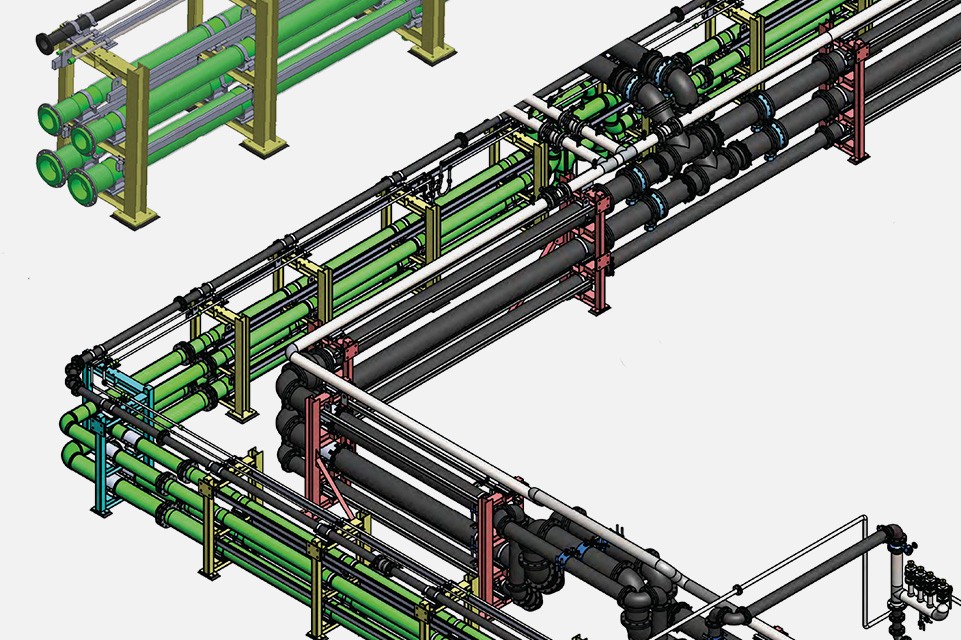
Data centers are under pressure to add capacity faster than ever. But expanding an operating mission critical facility presents a different challenge than building a new one.
New cooling capacity has to be added quickly without compromising the reliability of the systems already supporting mission-critical data center operations.
For owners, engineers and contractors, prefabricated liquid cooling systems can provide a practical solution. Moving piping, pumps, valves and other mechanical components into a controlled fabrication environment reduces the amount of work that has to take place inside an active data center.
For GA Fleet customers, prefabrication can also be combined with local pumping, HVAC, engineering, startup and aftermarket expertise to support the cooling system throughout its lifecycle.
Data Center Expansion Is Also a Cooling Infrastructure Challenge
Adding servers isn't as simple as adding racks.
Higher-density computing, AI and other demanding applications can require significant additions or changes to the facility's cooling infrastructure. Pumps, piping, heat exchangers, valves, controls and other components may all need to accommodate higher cooling loads.
At an operating data center, that work has to be carefully coordinated around existing infrastructure.
Traditional field construction can introduce challenges such as:
- Limited space for crews and materials
- Coordination between multiple trades
- Hot work inside or near operating facilities
- Longer installation schedules
- Extended commissioning
- Potential disruption to existing systems
Prefabrication moves a significant portion of that activity away from the data center.
How Prefabricated Cooling Systems Support Data Center Expansion
1. Add Cooling Capacity Faster
One of the biggest advantages of prefabrication is the ability to work in parallel.
While the contractor prepares the data center for expansion, mechanical assemblies can be engineered, fabricated and tested offsite.
Once delivered, the prefabricated system can be positioned and connected rather than built component by component in the field.
This can shorten installation schedules and help new cooling capacity come online sooner.
2. Reduce Work Inside an Operating Data Center
For an existing data center, reducing onsite construction can be just as important as reducing the overall project schedule.
Prefabrication can reduce the amount of:
- Field piping and assembly
- Hot work
- Material staging
- Construction traffic
- Trade coordination
- Testing and troubleshooting
Fewer construction activities inside the facility can mean less congestion and fewer opportunities for work to interfere with mission-critical equipment.
For engineers planning an expansion, that reduced operational exposure can be a significant benefit.
3. Scale Cooling Infrastructure as Demand Grows
Not every data center needs its ultimate cooling capacity on day one.
A modular approach allows cooling infrastructure to be expanded in phases as computing demand increases.
Prefabricated systems can be designed with future expansion in mind, including provisions for:
- Additional pumps
- Future piping connections
- Increased flow requirements
- Additional cooling equipment
- Expanded controls and instrumentation
Planning these requirements early can make future expansion easier and help owners avoid unnecessarily overbuilding the initial system.
4. Support Increasing AI and High-Density Cooling Loads
AI and high-performance computing are changing data center cooling requirements.
As rack densities increase, facilities may need to add or expand liquid cooling infrastructure more quickly than originally anticipated.
Prefabricated mechanical systems provide a flexible way to add cooling capacity without requiring every component to be assembled inside the operating facility.
They can also support repeatable designs as similar cooling infrastructure is added to additional data halls or buildings.
Pumps Need to Be Part of the Expansion Strategy
Adding cooling capacity isn't simply a matter of adding more piping.
The pumping system has to deliver the required flow and pressure across both existing and expanded operating conditions.
Engineers should evaluate how an expansion affects:
- System flow
- Total dynamic head
- Pump operating points
- Variable-frequency drive operation
- Pump efficiency
- Redundancy
- Controls
- Available system capacity
- Future expansion requirements
An existing pump selected for yesterday's cooling load may not be the right solution for tomorrow's system.
GA Fleet works with engineers and contractors to evaluate pumping and mechanical equipment as part of the complete system—not simply as individual components.
That becomes particularly important when new cooling infrastructure must integrate with equipment that is already operating.
Design for Serviceability, Not Just Capacity
An expansion project is also an opportunity to think about long-term reliability.
Data center cooling equipment will eventually require inspection, maintenance or repair. Engineers should consider those requirements before finalizing a new mechanical layout.
That includes questions such as:
- Can pumps be accessed and removed for service?
- Are isolation valves positioned appropriately?
- Is there adequate redundancy?
- Can equipment be serviced without shutting down the entire cooling system?
- Are critical replacement parts readily available?
- Can future cooling capacity be added without major reconstruction?
These details may not affect initial startup, but they can have a major impact on the system over its operating life.
Factory Testing Can Simplify Startup
Every data center expansion eventually reaches the same critical point: bringing the new cooling capacity online.
Factory-built systems can be assembled, inspected and tested before shipment. This allows many potential issues to be identified before equipment reaches the project site.
Once installed, commissioning teams can focus more of their effort on integration and overall system performance rather than troubleshooting individual field-installed components.
For an operating mission-critical facility, that can help make the transition from construction to operation more predictable.
Standardization Can Make the Next Expansion Easier
Many data center operators aren't expanding just one facility.
They may be adding capacity across multiple buildings, campuses or markets.
Once a prefabricated cooling system design has been engineered and validated, the basic approach can potentially be repeated on future projects.
Standardization can help:
- Reduce engineering time
- Simplify procurement
- Improve equipment consistency
- Streamline installation
- Simplify training and maintenance
- Improve spare-parts planning
- Accelerate future expansion
The goal isn't necessarily to make every system identical. Site conditions and operating requirements will still vary.
The goal is to avoid starting from zero every time additional capacity is needed.
Local Support Backed by Expanded Data Center Capabilities
GA Fleet and Fleet Pump & Service Group support commercial and mission-critical mechanical systems throughout New York, New Jersey and Connecticut.
Our capabilities include pumping systems, HVAC equipment, engineering support, startup, preventative maintenance, pump repair, flow testing, parts, rental equipment and emergency service.
Through the broader Vessco Water network, GA Fleet customers can also access specialized data center cooling capabilities from sister company Santa Fe Water Systems, including:
- Prefabricated liquid cooling pipe skids
- PP-RCT piping systems
- Pump skids
- Valve stations
- BIM coordination and 3D modeling
- Mechanical engineering support
- Factory fabrication
- Factory testing
- Startup and commissioning support
This combination gives data center owners, engineers and contractors access to specialized prefabrication capabilities backed by local equipment knowledge and ongoing service support.
Expansion Should Start With the Long Term in Mind
Data center expansion is moving quickly, but speed shouldn't come at the expense of reliability.
Prefabricated cooling systems can help data center owners and contractors add capacity faster, reduce onsite construction and simplify commissioning. Just as importantly, they provide an opportunity to engineer future growth into the system from the beginning.
GA Fleet can help evaluate pumps, mechanical equipment and cooling infrastructure for both immediate requirements and future expansion—and connect customers with the additional prefabrication capabilities available across the Vessco Water network.
Planning a data center expansion in New York, New Jersey or Connecticut? Contact GA Fleet to discuss your pumping, mechanical equipment and liquid cooling infrastructure requirements.
Frequently Asked Questions
Why is prefabrication beneficial when expanding an operating data center?
Prefabrication moves much of the mechanical assembly and testing away from the active data center. This can reduce onsite construction, trade coordination and installation time while limiting disruption around mission-critical equipment.
Can prefabricated cooling systems support phased data center expansion?
Yes. Systems can be designed so cooling capacity can be added in stages as computing demand grows. Future piping connections, pumps, controls and additional equipment can be considered during the initial design to simplify later expansion.
How do prefabricated cooling systems support AI data centers?
AI and high-density computing can create greater cooling loads and accelerate the need for liquid cooling infrastructure. Prefabricated systems allow cooling equipment and piping assemblies to be manufactured offsite and installed more quickly as new capacity is required.
Why should pumps be evaluated when a data center expands?
An expansion can change system flow, head and operating conditions. Engineers should confirm that existing pumps can accommodate the expanded system efficiently and reliably or determine whether additional or replacement pumping capacity is required.
Can prefabricated systems reduce data center downtime during expansion?
Prefabrication can reduce the amount of construction required around operating equipment. While the actual shutdown requirements depend on the system and integration strategy, reducing field fabrication can help minimize disruption and shorten the installation and commissioning window.
Can prefabricated cooling systems be standardized across multiple data centers?
Yes. Once a system design is proven, many elements can be standardized and adapted for other facilities. This can reduce engineering and procurement time while creating greater consistency in equipment, controls, maintenance and spare parts.
What data center services does GA Fleet provide?
GA Fleet and Fleet Pump & Service Group support pumping, HVAC and mechanical systems with equipment expertise, engineering assistance, startup, preventative maintenance, pump repair, flow testing, parts, rentals and aftermarket service. Additional prefabrication and liquid cooling capabilities are available through Santa Fe Water Systems and the Vessco Water network.
Who manufactures the prefabricated liquid cooling systems?
Santa Fe Water Systems, GA Fleet's sister company within Vessco Water, specializes in engineered prefabricated liquid cooling pipe skids and related systems. GA Fleet can combine those capabilities with local equipment expertise, engineering coordination and ongoing service support in the Northeast.